


For centuries, self-representation has been a recurring theme in Western art. Renaissance, Baroque, modern, postmodern — that introspective gaze runs through painting, sculpture, printmaking, photography and other disciplines, from the traditional self-portrait to more experimental forms such as performance.
In photography in particular, many artists have turned inward, using their own body as both subject and source of inspiration. Joan Fontcuberta, Man Ray, Richard Avedon and Lee Friedlander are just a few who have made the self-portrait a touchstone for generations of artists that followed.
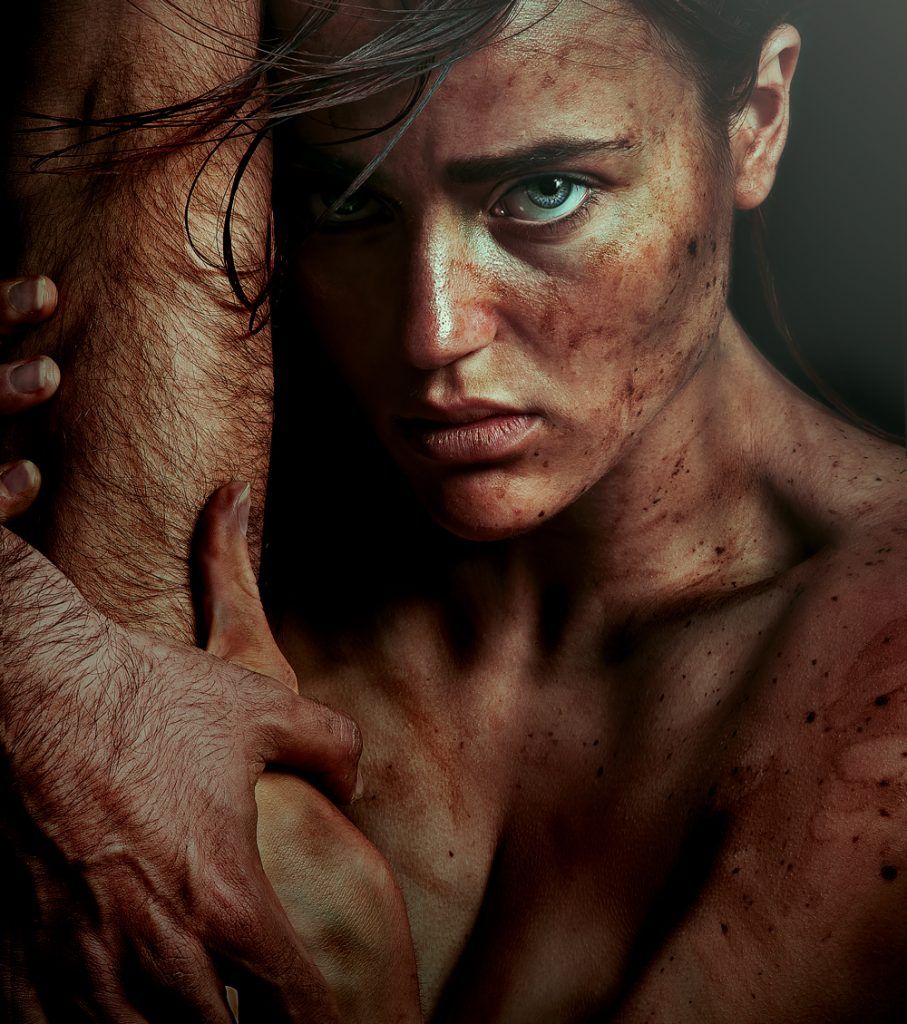
And just when we might think there is nothing left to surprise us in the realm of self-representation, we discover the work of contemporary artists who prove that the self-portrait still holds boundless possibilities. One such artist is Spanish photographer Cristina Otero (Spain, 1995). Through her self-portrait series, she became, at just 15, the youngest woman to hold a solo exhibition at an art gallery in her country. Today, her photographs captivate viewers with their extraordinary power and beauty.

Her work centres primarily on self-portraiture in what she herself describes as a "dreamlike, intimate and painterly" style. Her references stretch well beyond photography into the visual arts — Frida Kahlo, Hieronymus Bosch and Dalí, as well as movements such as Impressionism, the Pre-Raphaelites and Rococo.
In an exclusive interview with IMAGO - Instituto Superior de Artes Visuales, Cristina Otero reveals more than just her image — she opens up her inner world of ideas.
Do you have any photographic references you turn to when starting a new project?
My references are not purely photographic — they also come from painting, with artists like Frida Kahlo, Hieronymus Bosch and Dalí, and movements such as Impressionism, the Pre-Raphaelites and Rococo. Among my favourite photographers are Eugène Atget, Hans Bellmer, Joel-Peter Witkin, Eugenio Recuenco and Chema Madoz.
How did you come to self-portraiture — was it a practical choice, or did the genre appeal to you from the start?
Before I began, I had never thought of self-portraiture as an artistic genre at all — I started out of pure necessity. From the very beginning I knew I wanted to photograph female faces, and since I had no resources at hand, I decided to turn my own face into a blank canvas that I would make up, style and photograph.

How did you develop your photographic style?
I have always followed my own instincts. I have never been dishonest in creating an image — I always speak about how I feel and where I am in my life at that moment. That is what has driven the evolution of my work: as I have grown, it has grown with me. Sincerity is what gives an artist their uniqueness.
How do you think your work has changed over the years?
I think it has matured, because my thoughts and my way of seeing life have matured too. I now have far greater artistic knowledge than when I started, and that has given me a perspective I didn't have before — whether it's thinking about colour, light or concept.

What does it mean to you to be the youngest artist to hold a solo exhibition in your country?
It's something that happened unexpectedly — I never imagined that what I was doing as a hobby would end up in an exhibition that would launch my career. I know I was very lucky to have that opportunity, and I'm grateful for every moment that event has given me since. At the time it felt like a dream; looking back now, I see it as an enormous privilege.
How does your work fit into the landscape of contemporary photography?
It's very difficult to talk about contemporary photography when there are so many different currents running through it. That very heterogeneity is what allows my work — and the work of other photographers — to find its own audience without being dismissed by a fixed set of rules, as would have happened until quite recently.

In practical terms, according to Cristina Otero: how do you succeed in a field as competitive as photography?
The most important thing is that your work is innovative and different from everything else out there. You have to take it seriously, think deeply about every concept, and never follow photographic trends simply because they have a broader audience.
Where do you want to take your work in the future? Are there any specific projects you're working on right now?
For now, I have no plans to move away from self-portraiture. I'm working on several projects at the moment — one of them I've been developing for more than seven years.

What advice would you give to photographers who are just starting out, or who are currently studying photography?
I will always say that the most important thing is to believe in your photography — to believe in yourself. Be honest with yourself and let that honesty show in every image you make. Viewers will feel it, and they will believe in you. Trends come and go, so don't chase them — be aware of them, yes, but don't follow them blindly. Consistency, hard work and passion are the keys.



Published in Interviews
Subscribe to our newsletters
The latest news, articles and resources sent to your inbox weekly.




Comments
Be the first to comment
Leave a comment