

Key takeaways
- Documentary photography is, first and foremost, an established photographic genre — and at the same time, a clear ethical stance towards what you photograph.
- The most common mistake beginners make isn't technical: it's going out to "find photos" instead of committing to a specific subject for as long as that subject demands. A week's work documents nothing.
- Before you edit your sequence, edit your presence: if the people in front of your camera behave differently because you're there, you haven't yet reached the point where documentary work can truly begin.
- If you're going to publish documentary work, the caption is not optional. An image without verifiable context isn't a document — it's ambiguity with pretensions.
What separates a documentary photograph from a photo that simply happened
There are thousands of photographs taken on streets, in markets, at protests, in hospitals. Most of them are not documentary photography. They are records. The difference lies not in the content of the image, but in the sustained intention behind it.
Documentary photography is work about reality built with rigour, continuity and a clear position from the photographer towards their subject. It's not about being in the right place at the right time, though that helps. It's about going back. And going back again. Until people no longer look at you as an intruder with a camera, until you understand the rhythm of what you're photographing, until your presence stops altering what happens.
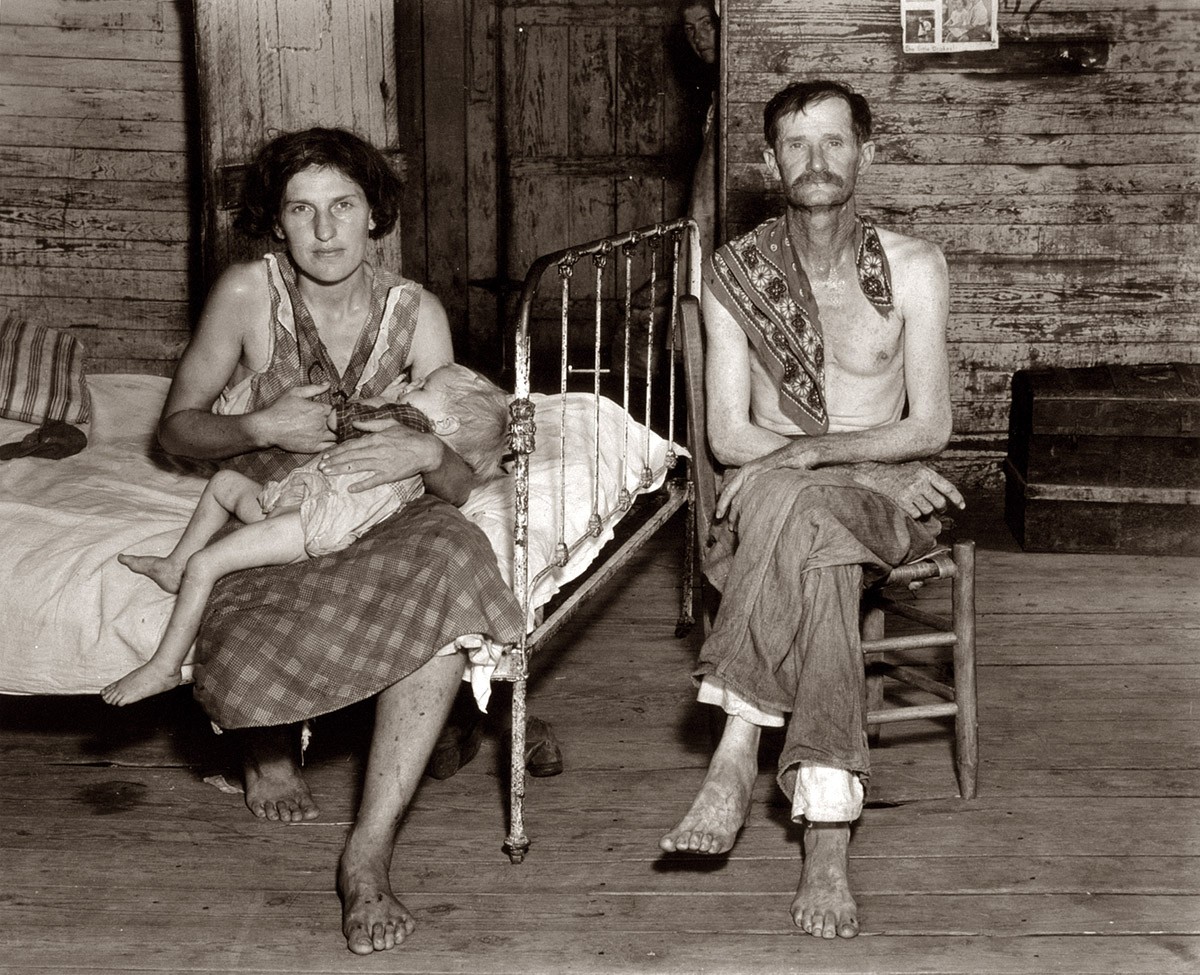
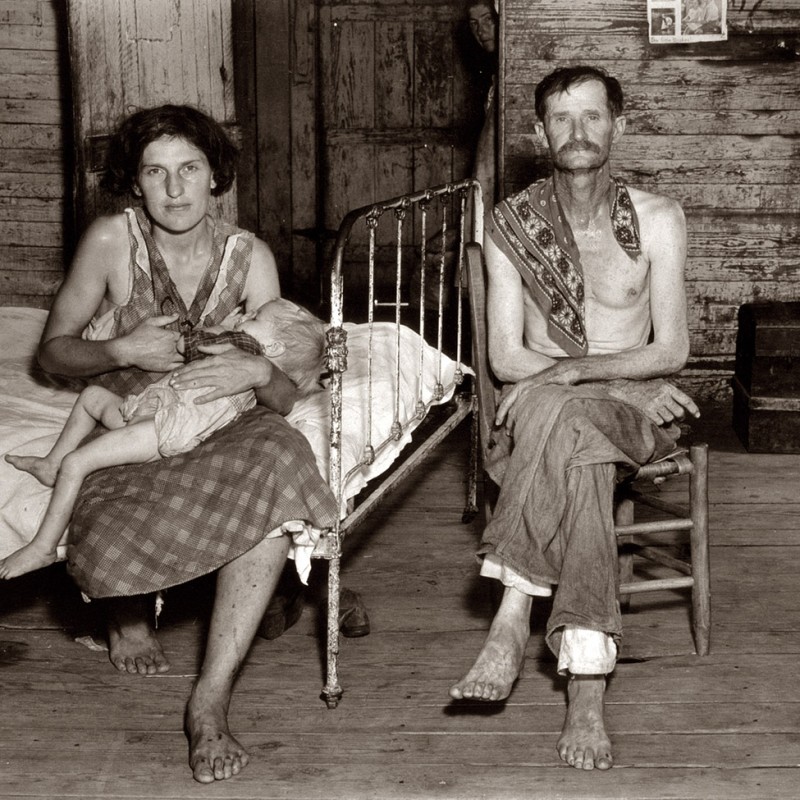
Walker Evans spent years photographing the American South during the Great Depression. Sebastião Salgado took six years to complete Workers. I mention this not to discourage anyone, but to be honest about the timescales in which this genre operates when it's practised seriously. A meaningful documentary project cannot be resolved in a weekend.
The confusion between documentary, photojournalism and street photography
All three capture reality without intervening in it. That's where the similarity ends.
Photojournalism serves a news story: it has a deadline, responds to a specific event, and its basic unit is the image that illustrates something that has already happened. Documentary photography serves a subject: it may carry no news value at all, and its basic unit is the series, not the individual photograph.
Street photography, as many of us practise it, is closer to poetry than to document. Garry Winogrand photographed for the pleasure of seeing what happened to the world when he turned it into a photograph — his own definition. That doesn't document anything in the strict sense. It's a visual practice, not a journalistic or social one.
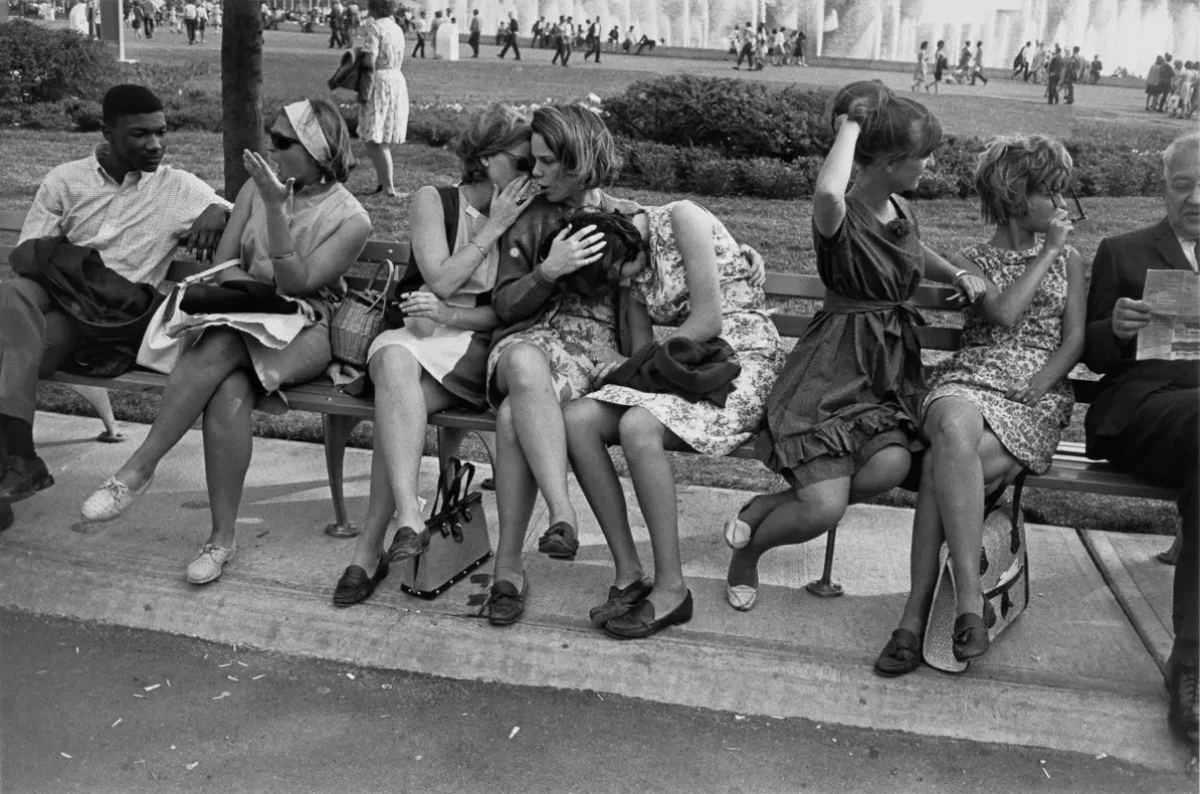
You can do all three on the same day with the same camera. But confusing them will lead you to publish series with no backbone, to lose track of the story you're telling, and in the worst case, to photograph vulnerable people without the responsibility that act demands.
Subject before camera
The question I hear most from people who want to start working documentarily is about gear. Which lens for low-light interiors, whether the noise on the Fujifilm XT-5 is manageable at ISO 6400, whether shooting RAW makes sense when you're dealing with high volumes of images. These are all reasonable questions — they're just in the wrong place in the conversation.
Subject matter comes first. And by subject matter I don't mean a vague concept —"urban poverty", "indigenous traditions"— but something specific and verifiable: the Jamaica market at 4 in the morning when the flower trucks arrive, the mechanics in Colonia Doctores working out on the street, the women who hold late-night prayer chains at a parish in Tepito. Something concrete, with identifiable people, a place and a time.
Specificity protects you from two things: superficiality —because when a subject is too broad you never know when you have enough— and paralysis —because when a subject is concrete you know exactly where to go tomorrow morning.
On the subject of gear: a fixed lens between 28mm and 35mm full-frame equivalent is what most documentary photographers use, and there's a practical reason for it. It forces you to get close. And getting close forces you to commit. A zoom lets you shoot from whatever distance still feels comfortable, which is almost always the wrong distance for documentary work.
Ethics isn't decorative
I'll be direct here, because this is the topic most consistently avoided in generic documentary photography tutorials.
Photographing people in vulnerable situations —extreme poverty, illness, displacement, addiction— without their informed consent is ethically problematic, even when it's legal in a public space. "I can do this" and "I should do this" are not the same question. And the answer to the second depends on what you're going to do with those images, who will see them, and whether the person photographed has any ability to object to or contextualise their own representation.
Consent in documentary photography isn't always a signed form. Sometimes it's a conversation. Sometimes it's months of presence in a community until your work is known and people understand what you do. But ignoring this question entirely and operating under the logic of "public space is fair game" produces work that extracts value from the most exposed people for the photographer's benefit. That isn't documenting: it's extracting.
The practical question I ask myself before publishing an image of someone who hasn't given me explicit consent is: could this image cause concrete harm to this person if their neighbours, employer or family saw it? If the answer is yes, or I don't know, the image doesn't go out.
How to build a documentary series that works
A documentary series is not a collection of strong photographs on the same theme. It's a sequence with an argument.
That argument doesn't have to be explicit —I'm not talking about text or didactics— but it has to exist. There's a way into the subject, a development that reveals tension or contradiction, and something the viewer takes away that they didn't bring with them. If after seeing your twenty images a viewer can say "I saw photos of the market", you've fallen short. If they can say "I understood something about how that place works that I couldn't have understood any other way", you've achieved something.
To build that, you need far more images than you'll ever use. Far more. In serious documentary work, a hit rate of one usable image for every hundred frames is not unusual. That's not inefficiency: it's the process. The images you discard are the ones that teach you to see what you need to look for.
When you edit —in the sense of selecting and sequencing, not retouching— the question isn't "which is the best photo?" but "what does the series still need?" Sometimes the most necessary image is the most visually dull one: the establishing shot that sets the scene, the portrait that puts a face to someone who appears later in action, the transitional image that gives the eye a moment to breathe.
The caption as part of the work, not a formality
In documentary photography, the caption is part of the image. Not an afterthought.
A photograph of a man sleeping on the street can mean many different things depending on what appears beneath it. If it reads "Juan, 54, lost his job in 2020 and has been living on the street for eighteen months, Colonia Guerrero, CDMX" —that's a document. If it says nothing, or simply says "homeless," it's an image with documentary aspirations that doesn't actually document anything verifiable.
The minimum standard I hold myself to: a name or form of identification the person agreed to, a location, a year. If there's relevant context the image can't convey on its own, that goes in too. What never goes in is information I can't verify or that the person didn't confirm to me.
Where to start if you're just beginning
Choose a subject you can photograph within twenty minutes of where you live. Not because distant subjects are any less valid, but because the logistics of travelling far are the first thing that kills continuity —and continuity is the only thing that makes documentary work possible.
Commit to going to the same place or spending time with the same people for at least two months, at least once a week. At the end of the first month, edit what you have without adding any new photos. Whatever you notice is missing from that edit becomes your working brief for the following month.
Show your work in progress to someone who knows nothing about the subject. If they have to ask you who that person is or what's happening in a particular image to make sense of the series, you still have editing or captioning work to do. If the series speaks for itself, you're on the right track.
If you want a more structured approach from the start, the Street Photography Workshop at IMAGO explores photography in real-world contexts with feedback on series —something directly applicable to urban documentary projects. It's not the same as a documentary photography workshop, but both build the same muscle: editing your own work with intention and critical eye.
What I don't recommend is waiting until you have "enough technique" before you start documenting. The technical skill required for documentary photography is far less than you think. What takes time to develop is the eye for recognising what's worth documenting, the patience to be where you need to be, and the judgment to know when a series is ready. None of those three things are learned in a classroom.
Published in Articles
Subscribe to our newsletters
The latest news, articles and resources sent to your inbox weekly.
Comments
Be the first to comment
Leave a comment