


Over the past few months, I've made a significant shift in the camera gear I use. After several years shooting in the studio with Hasselblad and working outside the studio mainly with Canon and Leica, I've made a complete switch to Fujifilm. The reason? Times change, and I think we need to be smart and flexible enough to adapt.
I'll admit I have a "problem": once you've experienced medium format systems from Hasselblad, it's hard to imagine going back to smaller sensor systems for work where the highest possible technical quality is the goal.
But the Hasselblad H system — the one I had in my hands — was becoming increasingly impractical: large, heavy, and with almost no options for sourcing new lenses here in Mexico, my camera was being used less and less. I wanted a medium format camera that was smaller, more versatile, and offered greater lens availability.

On top of that, I needed a camera to replace my Leica without sacrificing image quality or shooting experience. And while I was perfectly happy with my Leica images, video had become a professional necessity — it was time to find a hybrid camera that could cover that need as well.
Enter Fujifilm.
I was familiar with Fuji, but I hadn't taken the plunge into their digital systems until two cameras arrived on the market: the Fujifilm X-T4 and the GFX100S. Suddenly, the skies opened up — both cameras seemed to tick every box on my list.
The Fujifilm X-T4 arrived first, directly from Fujifilm México, and a few months later the Fujifilm GFX100S followed — the camera I'll be writing about in this article.

Getting hands-on with the GFX100S...
Before sharing my experience, I'd like to give a brief overview of this camera for those who aren't familiar with it.
The Fujifilm GFX100S is a digital medium format mirrorless camera featuring a 5-axis in-body stabilised sensor measuring 33×44 millimetres (mm) and 102 megapixels (MP). This medium format sensor is smaller than those used by other medium format camera brands such as Hasselblad and Phase One, some of which mount sensors measuring 53.7×40.2 mm. Fujifilm's choice of sensor size reflects their goal of building a compact and affordable medium format camera. Even so, the GFX100S sensor is approximately 1.7 times larger than the popular and much-coveted 24×36 mm full-frame sensor.


Getting into the details: anyone who has used cameras such as the Fujifilm X-Pro3, X100V or X-T4 will notice a significant shift in how the GFX100S handles. With this camera, Fujifilm has moved away from the retro design and physical dials for shutter speed, ISO and exposure compensation, opting instead for a more "modern" approach built around control wheels and a PSAM dial, much like cameras from other manufacturers.
Does this affect the shooting experience? That will depend on the individual user. Personally, I'd love a retro design with dials like those on my X-T4 — but if this design change means a more compact body and a more accessible price point, then I'm all for it. It certainly doesn't get in the way of using the camera, and photographers coming from other brands will feel right at home with the GFX100S.

Either way, the GFX100S is a remarkable feat of technology packed into such a "small" body — by medium format standards, at least — to the point where it becomes a perfectly viable system for shooting outside the studio, and even for street photography. That said, bear in mind that while the camera itself is light (900 g) and relatively compact, the lenses don't always follow suit. In fact, most of them are quite large and heavy — with a few exceptions, such as the 50mm f/3.5.
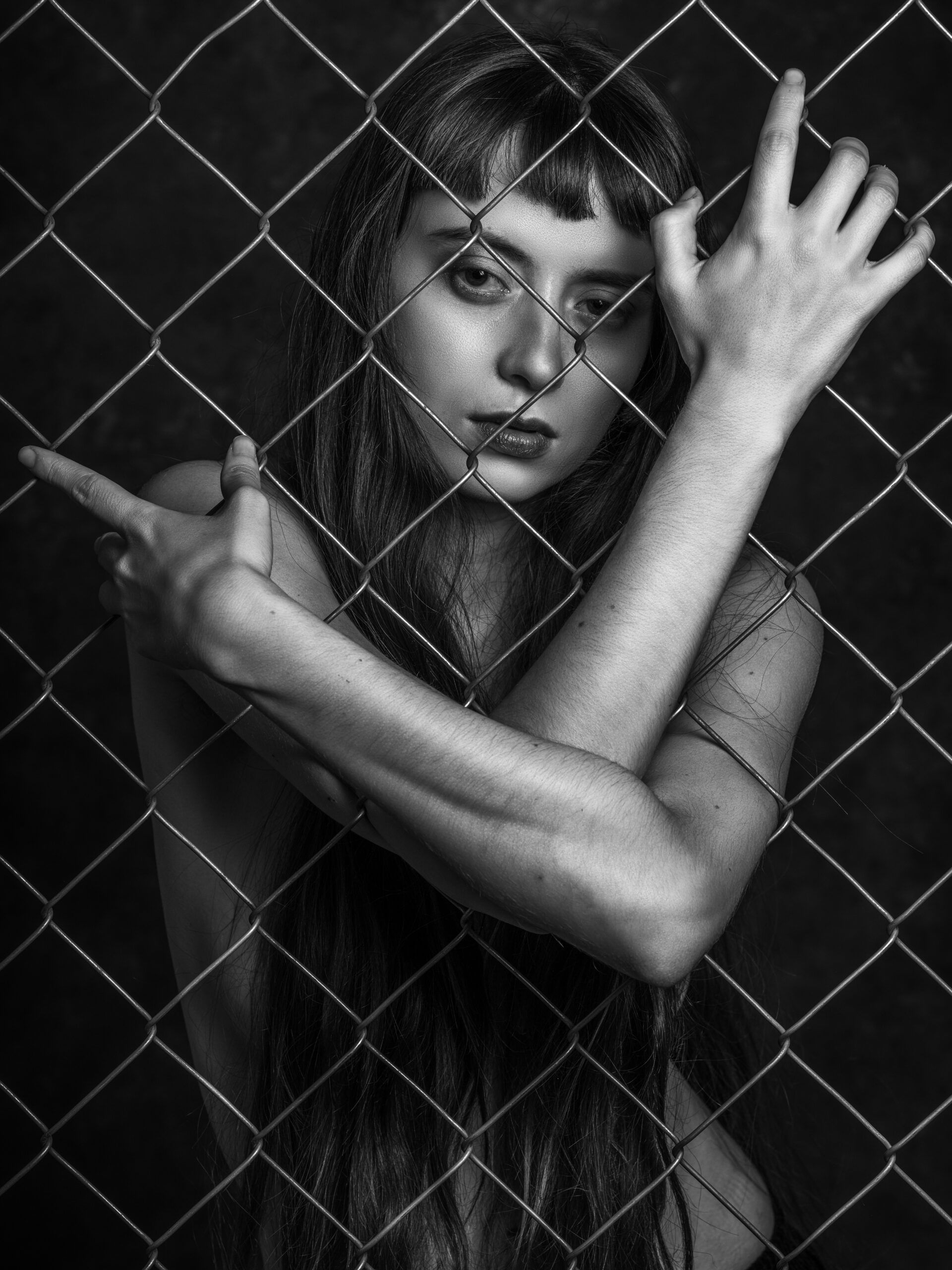
The autofocus is impressively accurate. I've been using eye-tracking during portrait sessions and, remarkably, I haven't come across a single out-of-focus shot when reviewing the images in post. As for autofocus speed, it's more than adequate for my needs — though this will vary depending on the lens, and it generally lags a step behind APS-C or full-frame cameras, which is to be expected given that medium format systems have larger, heavier optical elements to move. It's worth noting that the GFX100S benefits from a hybrid autofocus system (contrast and phase detection), which helps deliver faster focusing, particularly in low-light conditions.

The image quality — the result of combining the superb Fujinon optics with the monstrous 102MP sensor housed in this camera — is simply phenomenal. I can lose myself staring at the extraordinary level of detail captured in every single shot. Also worth noting is the clear advantage of the larger dual-gain sensor when it comes to high-ISO performance. What does that mean in practice? Very low noise levels, even at the highest sensitivity settings. This is closely tied to the wide dynamic range of the large sensor, which offers up to 16 bits of colour depth.

I've found the image stabilisation extremely useful for shooting handheld at slow shutter speeds, making this an ideal system for night, street, travel and landscape photography without a tripod. Despite the sensor's high resolution, I've consistently achieved razor-sharp images at shutter speeds as slow as 1/15 of a second.
So how does all of this compare to other medium format cameras? I'll limit myself to sharing my experience with Hasselblad.
Some time ago I began a photographic project called "One Hundred Faces of the Cuban Revolution." Wanting the highest possible quality I could get my hands on, I'd been taking the Hasselblad H4D to Cuba. The images are phenomenal, but the system proved quite restrictive in both technical and creative terms. With the Fujifilm GFX100S, I have the chance to continue the project with far greater freedom in my approach — which allows me to capture bolder, more interesting images.


To sum up, the GFX100S is a truly remarkable camera — among the very best available on the market today — and one that will leave no photographer unmoved who appreciates equipment of the highest calibre. Its outstanding image quality, fast autofocus, in-body stabilisation, relatively compact size and the superb Fujinon GF optics, all at a comparatively accessible price point, make this system a compelling choice for any photographer striving to capture the finest images possible right now.
Published in Camera gear reviews, Cameras
Subscribe to our newsletters
The latest news, articles and resources sent to your inbox weekly.


Comments
Be the first to comment
Leave a comment