


By Yunier Escobar.
"The illiterate of the future will not be those who cannot write, but those who cannot photograph." László Moholy-Nagy
We are both witnesses and participants in a growing dependence on images as a means of communication. Perhaps we are rediscovering the primitive role of the image as a sign, or perhaps images never really lost that communicative power in the first place. What is clear is that, with the boom in social media and digital technology, verbal communication systems are being displaced by visual ones: emojis, animated GIFs, stickers, and of course… photographs. In our daily lives, we are becoming accustomed to expressing our thoughts and feelings through images rather than words. That may well explain why we so often prefer messaging apps to a traditional phone call.
So — could visual language become our default way of communicating in the future? Could we one day learn visual language at school instead of verbal language, being taught to "read and write with images"?"What is known is what is seen." Or perhaps we could say: "that which can be known is that which can be seen." José Luis Brea.

Lizette Abraham. Encounters with Uncertainty.
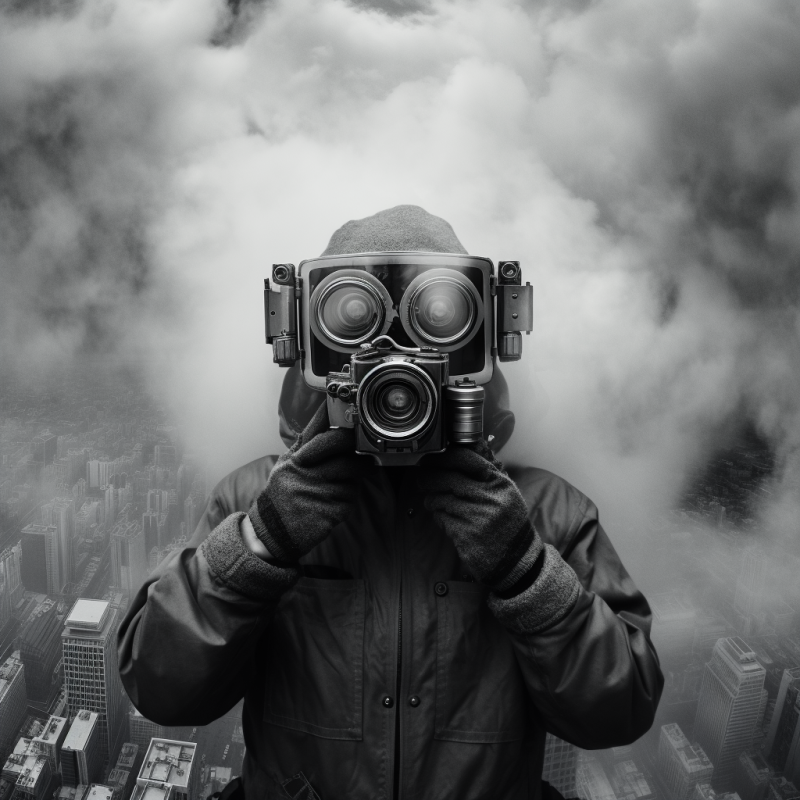
Setting aside any speculation about the future, one thing is certain: learning the language of images is becoming ever more essential. Without it, we risk being visually illiterate — unable to fully take part in the communicative life of contemporary society. It is not enough simply to "understand" the images that bombard us every second; we also need to be able to communicate through images of our own making. This is why photography has become an indispensable tool for creation, expression and communication. We cannot afford to put off learning its language any longer, or we will find ourselves at just as much of a disadvantage as someone who cannot read or write. Concepts such as depth of field, composition, framing, the golden ratio, shot types, rhetoric, semantics, semiotics — none of these can remain foreign to us. Today, most people use a camera the way a small child picks up a pencil — playing with it on paper, not yet able to express a real idea, because they have not yet mastered the complexities of writing. What do you think? Leave a comment and share!Published in Articles
Subscribe to our newsletters
The latest news, articles and resources sent to your inbox weekly.

Comments
Be the first to comment
Leave a comment