

Key Takeaways
- Choosing where to study photography isn't just about price or convenience — it comes down to the depth of the programme, the quality of the teaching staff, and the kind of photography you want to pursue.
- There are real differences between intensive workshops, modular courses and diplomas; mixing them up is a common source of frustration for intermediate students.
- Before enrolling in any programme, there are specific questions you should ask the school — and answers you need to know how to read correctly.
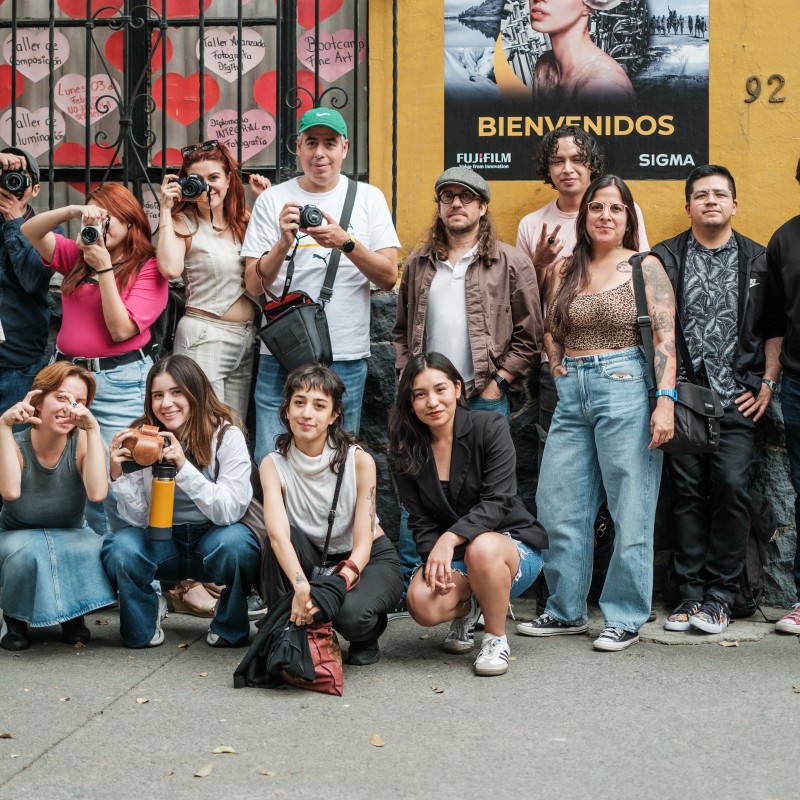
Every year, hundreds of people in Mexico City reach the same point: camera in hand, months of YouTube tutorials behind them, and a nagging sense that something is still missing. That there's a gap between what they can do and what they want to achieve. And then comes the inevitable question: where can I actually study photography properly?
This article isn't a star-rated list of schools. It's a guide to help you make that decision with confidence — understanding what really matters and avoiding the most common mistakes people make when they start searching without knowing quite what they're looking for.
The first mistake: confusing format with level
One of the most common misconceptions when looking for photography courses is assuming that an intensive workshop offers the same learning experience as a three-month modular course. It doesn't. That's not to say one is better than the other in absolute terms — they simply serve different purposes at different stages of your development.
An intensive workshop — typically one to three days, focused on a very specific topic — is ideal when you need to tackle a concrete challenge: taking your first steps with a camera, learning to use studio flash, understanding composition for portraiture, or mastering a post-production technique. If, however, your goal is to build broad expertise in photography, an intensive workshop simply doesn't allow enough time for anything to truly sink in.
Modular courses, which usually run over several weeks or months with regular sessions, are the most effective format for building knowledge progressively. There's time to practise between sessions, make mistakes, come back with questions, and receive feedback on work you've already done. This is the format where beginners and intermediate photographers tend to make the greatest leaps — both technically and creatively.
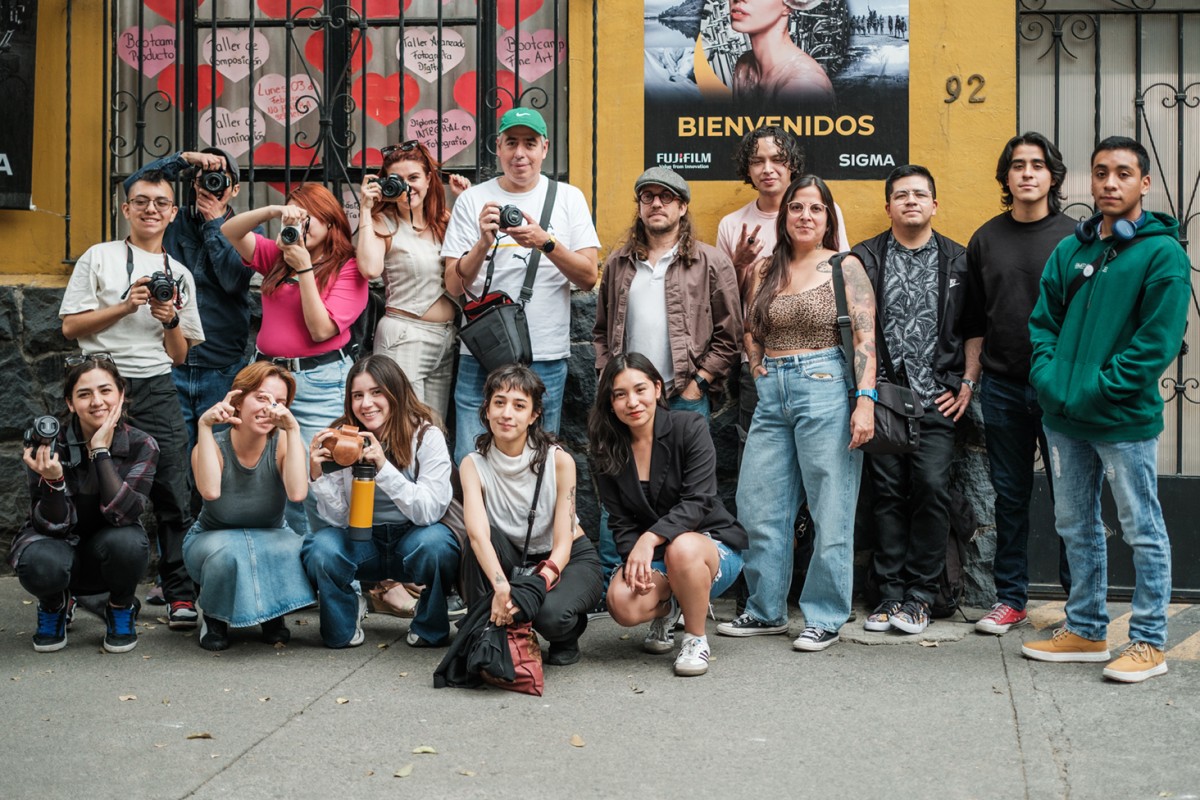
Diplomas, on the other hand, are longer, more comprehensive programmes designed to cover photography as a complete discipline — technique, history, aesthetics, professional practice. If your goal is to develop real depth, work as a photographer, or pursue a serious long-term project, a diploma makes far more sense. The Diplomado Integral en Fotografía, for example, is designed to cover everything a photographer needs to produce technically flawless images with a high level of creative vision.
In-person or online: the decision that depends most on the subject
The pandemic normalised online photography education — and in many ways, that was a good thing: it opened up access to quality training for people who can't travel or have demanding schedules. But it also gave rise to the mistaken idea that anything can be learned just as well in a virtual format. It can't, and it's worth being honest about that before signing up for something.
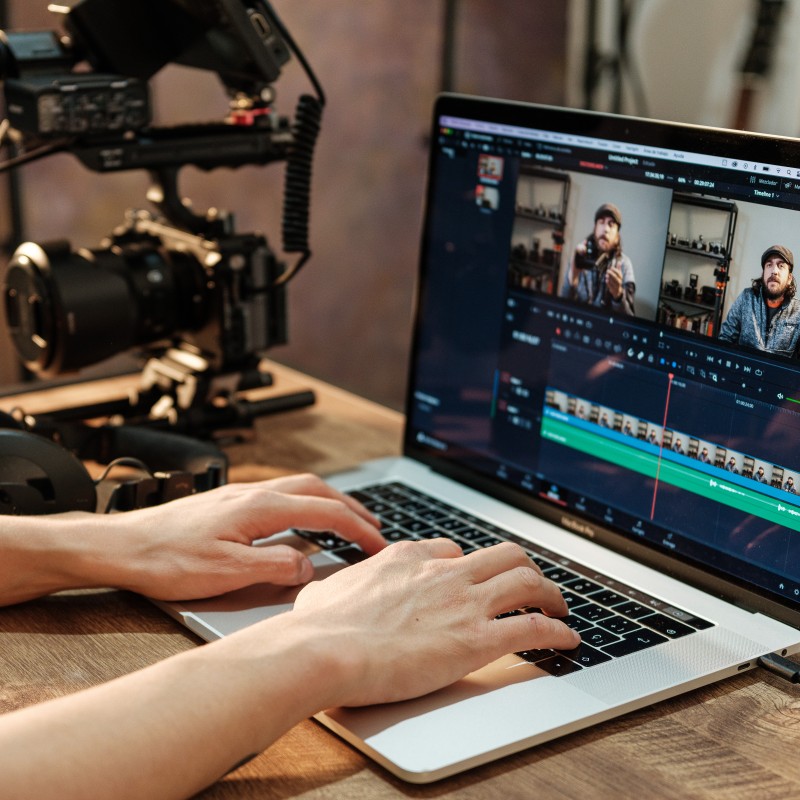
Some areas of photography translate really well to online learning: history of photography, colour theory, exposure fundamentals, post-production in Lightroom or Capture One, visual composition. These are subjects where the content comes across effectively on screen, and where students can practise independently, upload their work and receive feedback from the instructor.
Other areas lose something essential when moved entirely online: artificial lighting with flash or continuous sources, studio work, darkroom practice, directed portraiture. In these cases, being physically in front of the equipment — with an instructor who can correct in real time how you're placing a light source or positioning a model — makes a difference no video can fully replace. If the area you're interested in falls into this second category, look for in-person options even if they require a bit more logistical effort.
The Advanced Digital Photography Workshop is a good example of a programme where hands-on, in-person practice carries real weight in the learning experience — particularly when working with studio lighting and reviewing results in real time with immediate instructor feedback.
The syllabus: what it should tell you — and what it doesn't
When you look at a course or diploma programme, the first thing you see is a list of topics. And that's where another common mistake creeps in: judging a programme by how many subjects it covers rather than how deeply it explores them. A programme that lists a hundred topics over two weeks is almost certainly skimming the surface of all of them. One that dedicates three sessions to exposure and the histogram is probably making sure you genuinely understand it.
What you should look for in a good programme isn't exhaustiveness — it's coherent progression. Do the topics build from simpler to more complex? Are practical sessions woven in alongside theory? Are there clear feedback mechanisms — portfolio reviews, image critiques — or does the course simply deliver lessons and move on? These questions tell you far more than checking whether the syllabus includes "night photography" as one of its modules.
It's also worth asking the school what happens if you fall behind on a module or miss some content. Can you make up classes?
Specialisation vs. general training: knowing which is right for you
A question that comes up often among photographers with some experience is whether to take a general course or go straight into specialising in the genre they're drawn to. The honest answer is: it depends on how solid your current technical foundations actually are.
If you still have inconsistencies in your manual exposure, if you don't have a firm grasp of how colour temperature behaves in different lighting conditions, or if your post-production workflow is slow and intuitive rather than structured, you need to consolidate those fundamentals before specialising. Otherwise, you might arrive at a food photography workshop, for example, with technical gaps that limit how much of the specific content you can actually absorb.
If, on the other hand, you have a reasonable command of the technical side and what you're looking for is a concrete niche — product, portrait, architecture, documentary — then a specialised course makes far more sense than a general one that revisits things you already know. At that point, courses like Introduction to Food Photography become genuinely relevant, precisely because they're designed for someone who can already handle their camera with confidence and wants to apply that knowledge in a specific professional context.
Questions you should ask any school before enrolling
Beyond the general criteria, there are specific questions you should ask —and know how to interpret the answers to— before committing your time and money to any programme.
First: how many students are in each group? A practical photography workshop with more than twenty people is too large for the instructor to give meaningful individual feedback. That may be acceptable in a theory-based course, but in a hands-on one it's a red flag.
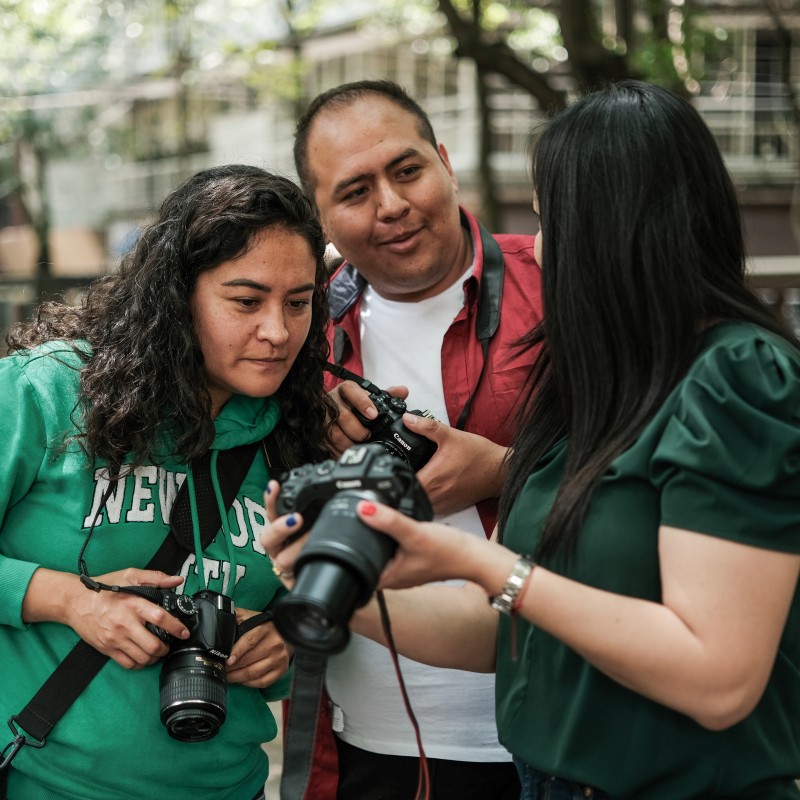
Second: does the programme include supervised practice, or is it all classroom instruction? Supervised practice —heading out to shoot with the instructor present, reviewing results together, making corrections on the spot— is what turns knowledge into real skill.
Third: will the instructors give you feedback on your work throughout the programme? If the course ends without anyone having critically reviewed what you produced along the way, something important is missing. Image critique —when done well— is one of the most valuable things a photography school can offer.
Fourth: what equipment do you need to bring, and what does the school provide? This is especially relevant for lighting, studio or analogue darkroom courses. Some schools assume you already have everything you need; others give you access to professional equipment as part of the programme, which makes a dramatic difference to the real value of your investment.
Fifth: if you have a question outside of class, does the school provide video or written materials so you can review the content on your own? Is there a student Q&A forum? If not, you'll be limited to your own notes and whatever time the instructor has available during sessions.
The final decision
Deciding where to study photography is, at its core, a decision about what kind of photographer you want to become and where you are on that journey right now. There is no single right answer, because there is no single type of student. What does exist is the difference between making that decision with solid information and clear criteria, or making it based on the lowest price or whichever programme happened to appear first in your search results.
If you're in Mexico City and want to explore options with structured programmes, instructors who are active in the industry and a genuine student community, I invite you to browse the full range of courses at Instituto IMAGO. From the Basic Digital Photography Course for those starting from scratch, to advanced workshops and specialist programmes for photographers who already know what they're looking for. It's always worth having a conversation about which programme is right for where you are and what you want to achieve —before you enrol.
Published in Articles
Subscribe to our newsletters
The latest news, articles and resources sent to your inbox weekly.

Comments
Be the first to comment
Leave a comment